Chao Wu / 吴超
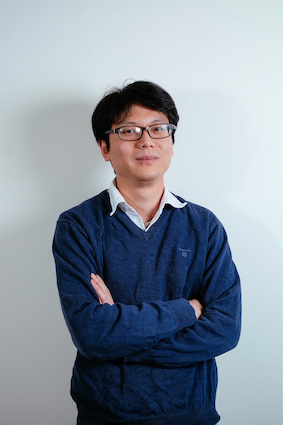 |
Chao Wu is a Tenured Associate
Professor at School of Public Affairs, Zhejiang University. He is now the director of Computational Social Science Research Center (ZJUCCS). He is also a Honorary Research Fellow of Data Science Institute and Department of Computing, Imperial College London, and the Director of Big Data Research Center - ZJPTCC.
吴超,浙江大学公共管理学院长聘副教授(博士生导师)。现任浙江大学计算社会科学研究中心(ZJUCCS)主任,同时担任英国帝国理工学院数据科学研究所及计算机系荣誉研究员,以及ZJPTCC大数据研究院主任。
His main research interests is about distributed machine learning, multi-agents, and computable social analytics. A list of selected publications is available here. He is also the creator of Mo, which is web-based platform for both AI modelling and eduction.
主要研究方向包括分布式机器学习、多智能体和计算社会科学。部分发表论文列表可在此处查看。他同时也是 Mo 平台的创始人,该平台是一个面向人工智能建模和教育的在线平台。
|
[
Research team研究团队 |
Blog博客 |
Reading list阅读清单 ]
[Recent talks近期演讲 |
Personal page on ZJU浙大个人主页 |
Github pageGithub 主页 ]
Research研究方向
- Multi-agent Social Simulation多智能体社会仿真: GAWorld provides a controllable and replayable generative multi-agent environment for urban social-behavior experiments; FOS supports social-system experiment design, branching, observation, comparison, and intervention evaluation.GAWorld 提供面向城市社会行为实验的可控制、可回放生成式多智能体环境;FOS 支持社会系统实验设计、分支推演、过程观测、对比分析与干预评估。
- Distributed Artificial Intelligence分布式人工智能: Research on data pricing and contribution evaluation; federated learning under non-IID data, heterogeneous models, and changing participation; and decentralized or personalized collaboration, privacy, robustness, and model fusion.围绕数据定价与贡献评估,研究非独立同分布数据、模型异构和动态参与条件下的联邦学习,以及去中心化与个性化协同、隐私保护、鲁棒性和模型融合。
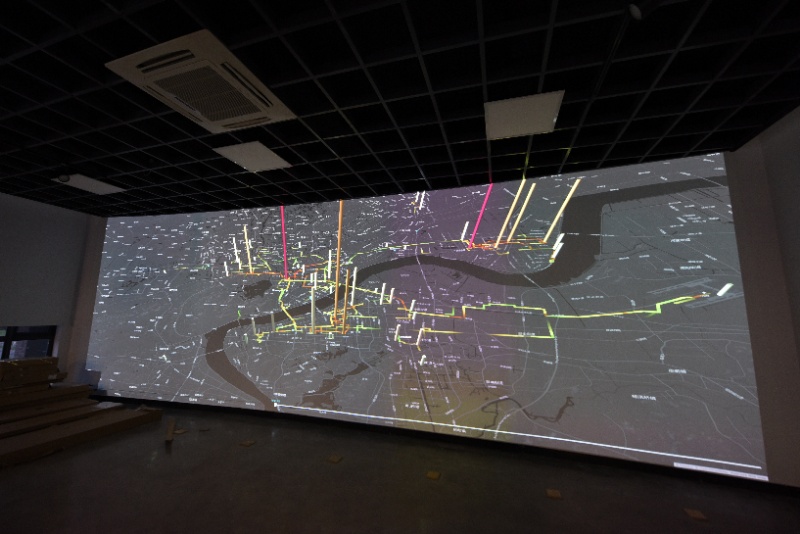
- Computational Social Science (Computable Social Analytics)计算社会科学(可计算社会分析): Data-driven and computational approaches to public policy and social systems, including government-attention allocation and evolution, policy evaluation, group interaction and social behavior, and applications such as intelligent transportation, smart cities, and neuro-management. We established ZJUCCS as a hub for this research.以数据驱动和计算方法研究公共政策与社会系统,包括政府注意力的配置与演化、政策评估、群体互动与社会行为,以及智能交通、智慧城市和神经管理等应用。我们建立了 ZJUCCS,作为该研究领域的枢纽。
- Mo PlatformMo 平台: Mo is an online platform for AI modelling, experimentation, and education, with public, ZJU, university, higher vocational education, high school, and K-12 versions.Mo 是一个面向人工智能建模、实验与教育的在线平台,提供公开版、浙大版、高校版、高职版、高中版和K-12版。
Recent publications (full list: Google Scholar Page):近期论文(完整列表:谷歌学术主页):
-
Li, Z., Li, Z., Lin, J., Shen, T., Xiao, J., Guo, Y., Lin, T., & Wu, C. (2026). Improving Model Fusion by Training-Time Neuron Alignment With Fixed Neuron Anchors. IEEE Transactions on Pattern Analysis and Machine Intelligence, 48(3), 2186-2199.
-
Li, Z., Wang, X., Shen, W. F., Kurmanji, M., Qiu, X., Cai, D., Wu, C., & Lane, N. D. (2026). Editing as Unlearning: Are Knowledge Editing Methods Strong Baselines for Large Language Model Unlearning? In AAAI 2026 (pp. 37627-37635).
-
Lu, W., Zhu, D., Shen, T., Zhu, D., Ye, A., & Wu, C. (2026). Watch Wider and Think Deeper: Collaborative Cross-modal Chain-of-Thought for Complex Visual Reasoning. CoRR abs/2601.02422.
-
Cai, Q., Wu, C., Zhang, Y., Yu, J., & Tian, X. (2025). Towards Generalizable Detector for Generated Image. In NeurIPS 2025.
-
Zhu, D., Song, Y., Shen, T., Zhao, Z., Yang, J., Zhang, M., & Wu, C. (2025). REMEDY: Recipe Merging Dynamics in Large Vision-Language Models. In ICLR 2025.
-
Yan, S., Li, Z., Wu, C., Pang, M., Lu, Y., Yan, Y., & Wang, H. (2025). You are Your Own Best Teacher: Achieving Centralized-level Performance in Federated Learning under Heterogeneous and Long-Tailed Data. In ICCV 2025 (pp. 2750-2759).
-
Li, Z., Lin, J., Li, Z., Zhu, D., Shen, T., Lin, T., Wu, C., & Lane, N. D. (2025). FedGuCci: Making Local Models More Connected in Landscape for Federated Learning. In KDD 2025 (pp. 1659-1670).
-
Zhang, R., Wang, Q., Liu, J., Huo, Y., & Wu, C. (2025). Leveraging Pretrained Diffusion Models for Zero-Shot Part Assembly. In IJCAI 2025 (pp. 2368-2376).
-
Huang, Y., Liu, C., Feng, Y., Wu, Y., Wu, C., Wu, F., & Kuang, K. (2025). Rewrite to Jailbreak: Discover Learnable and Transferable Implicit Harmfulness Instruction. In Findings of ACL 2025 (pp. 3669-3690).
-
Gao, L., Li, Z., Shang, X., Lu, Y., & Wu, C. (2025). FediOS: decoupling orthogonal subspaces for personalization in feature-skew federated learning. Machine Learning, 114(10), 228.
-
Wu, S., Liwang, M., Wang, D., Wang, X., Wu, C., Tang, J., Li, L., & Xia, X. (2025). Effective Two-Stage Double Auction for Dynamic Resource Provision Over Edge Networks via Discovering the Power of Overbooking. IEEE Transactions on Services Computing, 18(6), 3723-3735.
-
Shen, T., Li, Z., Zhao, Z., Zhu, D., Lv, Z., Kuang, K., Zhang, S., Wu, C., & Wu, F. (2025). FedMcon: an adaptive aggregation method for federated learning via meta controller. Frontiers of Information Technology & Electronic Engineering, 26(8), 1378-1393.
-
Luo, S., Liu, S., Cai, T., & Wu, C. (2025). Utilizing RBC system for taxation policy evaluation: An adaptive interaction framework based on deep reinforcement learning. Expert Systems with Applications, 268, 126365.
-
Li, G., Lin, J., Tang, Y., Wang, Z., Huang, Y., Zhang, J., Luo, S., Wu, C., & Guo, Y. (2025). Generalized Multi-agent Social Simulation Framework. CoRR abs/2510.06225.
-
Shen, T., Li, Z., Zhu, D., Zhao, Z., Wu, C., & Wu, F. (2025). FedEve: On Bridging the Client Drift and Period Drift for Cross-device Federated Learning. CoRR abs/2508.14539.
-
Shen, T., Zhu, D., Zhao, Z., Wu, C., & Wu, F. (2025). Will LLMs Scaling Hit the Wall? Breaking Barriers via Distributed Resources on Massive Edge Devices. CoRR abs/2503.08223.
-
Hou, S., Shang, X., Gowda, S. N., Lu, Y., Wu, C., Yan, Y., & Wang, H. (2025). CAPT: Class-Aware Prompt Tuning for Federated Long-Tailed Learning with Vision-Language Model. CoRR abs/2503.06993.
-
Zhang, F., He, Q., Kuang, K., Liu, J., Chen, L., Wu, C., Xiao, J., & Zhang, H. (2024). Distributionally Generative Augmentation for Fair Facial Attribute Classification. In CVPR 2024 (pp. 22797-22808).
-
Zhu, D., Sun, Z., Li, Z., Shen, T., Yan, K., Ding, S., Wu, C., & Kuang, K. (2024). Model Tailor: Mitigating Catastrophic Forgetting in Multi-modal Large Language Models. In ICML 2024 (pp. 62581-62598).
-
Liu, C., Kang, Y., Wang, S., Qing, L., Zhao, F., Wu, C., Sun, C., Kuang, K., & Wu, F. (2024). More Than Catastrophic Forgetting: Integrating General Capabilities For Domain-Specific LLMs. In EMNLP 2024 (pp. 7531-7548).
-
Zhu, D., Li, Z., Zhang, M., Yuan, J., Liu, J., Kuang, K., & Wu, C. (2024). Neural Collapse Anchored Prompt Tuning for Generalizable Vision-Language Models. In KDD 2024 (pp. 4631-4640).
-
Cui, F., Yang, X., Wu, C., Xiao, L., & Tian, X. (2024). Advancing Prompt Learning through an External Layer. In ACM Multimedia 2024 (pp. 807-816).
-
Zhang, R., Liu, J., Li, Z., Dong, H., Fu, J., & Wu, C. (2024). Scalable Geometric Fracture Assembly via Co-creation Space among Assemblers. In AAAI 2024 (pp. 7269-7277).
-
Li, Z., Lu, J., Luo, S., Zhu, D., Shao, Y., Li, Y., Zhang, Z., Wang, Y., & Wu, C. (2024). Towards Effective Clustered Federated Learning: A Peer-to-Peer Framework With Adaptive Neighbor Matching. IEEE Transactions on Big Data, 10(6), 812-826.
-
Luo, S., Li, Y., Liu, S., Zhang, X., Shao, Y., & Wu, C. (2024). Multi-agent Continuous Control with Generative Flow Networks. Neural Networks, 174, 106243.
-
Zhang, Z., Xu, W., Tang, M., Zhou, Y., Zhang, Q., Wu, C., & Wang, Z. (2024). Walking is Matter: A Benchmark for Fine-Grained Gait Segmentation. In PRCV 2024 (pp. 444-458).
-
Wang, P., Zhang, Q., Zhang, J., Li, G., & Wu, C. (2024). Feature Transformation for Few-Shot Learning. In IJCNN 2024 (pp. 1-8).
-
Li, H., Huang, L., Cheng, W., Wang, X., & Wu, C. (2024). Service Satisfaction Evaluation from Gaits Using Local Low-level and Global Co-occurrence Features. In ICICT 2024 (pp. 216-222).
-
Zhang, R., Chen, Y., Huo, Y., Liu, J., Xi, D., Liu, J., & Wu, C. (2024). SGW-based Multi-Task Learning in Vision Tasks. CoRR abs/2410.03778.
-
Li, Z., Gao, L., & Wu, C. (2024). Text-to-Model: Text-Conditioned Neural Network Diffusion for Train-Once-for-All Personalization. CoRR abs/2405.14132.
-
Liu, J., Feng, T., Jiang, Y., Wang, P., & Wu, C. (2024). Constructing Data Transaction Chains Based on Opportunity Cost Exploration. CoRR abs/2404.05272.
-
Li, Z., Lin, J., Li, Z., Zhu, D., & Wu, C. (2024). Improving Group Connectivity for Generalization of Federated Deep Learning. CoRR abs/2402.18949.
-
Yao, J., Zhang, S., Yao, Y., Wang, F., Ma, J., Zhang, J., Chu, Y., Ji, L., Jia, K., Shen, T., Wu, A., Zhang, F., Tan, Z., Kuang, K., Wu, C., Wu, F., Zhou, J., & Yang, H. (2023). Edge-Cloud Polarization and Collaboration: A Comprehensive Survey for AI. IEEE Transactions on Knowledge and Data Engineering, 35(7), 6866-6886.
-
Li, Z., Li, Q., Zhou, Y., Zhong, W., Zhang, G., & Wu, C. (2023). Edge-cloud Collaborative Learning with Federated and Centralized Features. SIGIR 2023, 1949-1953.
-
Zhu, D., Li, Y., Shao, Y., Hao, J., Wu, F., Kuang, K., Xiao, J., & Wu, C. (2023). Generalized Universal Domain Adaptation with Generative Flow Networks. CoRR abs/2305.04466.
-
Zhang, J., Li, B., Chen, C., Lyu, L., Wu, S., Ding, S., & Wu, C. (2023). Delving into the Adversarial Robustness of Federated Learning. CoRR abs/2302.09479.
-
Shen, T., Zhang, J., Jia, X., Zhang, F., Lv, Z., Kuang, K., Wu, C., & Wu, F. (2023). Federated mutual learning: a collaborative machine learning method for heterogeneous data, models, and objectives. Frontiers of Information Technology & Electronic Engineering, 24(10), 1390-1402.
-
Zhang, J., Chen, C., Li, B., Lyu, L., Wu, S., Ding, S., Shen, C., & Wu, C. (2022). DENSE: Data-Free One-Shot Federated Learning. NeurIPS 2022.
-
Wang, B., Li, G., Wu, C., Zhang, W., Zhou, J., & Wei, Y. (2022). A framework for self-supervised federated domain adaptation. EURASIP Journal on Wireless Communications and Networking, 2022(1), 1-17.
-
Zhang, J., Li, Z., Li, B., Xu, J., Wu, S., Ding, S., & Wu, C. (2022, June). Federated Learning with Label Distribution Skew via Logits Calibration. In International Conference on Machine Learning (pp. 26311-26329). PMLR.
-
Luo, S., Li, Y., Li, J., Kuang, K., Liu, F., Shao, Y., & Wu, C. (2022). S2RL: Do We Really Need to Perceive All States in Deep Multi-Agent Reinforcement Learning?. arXiv preprint arXiv:2206.11054.
-
Yao, J., Zhang, S., Yao, Y., Wang, F., Ma, J., Zhang, J., ... & Yang, H. (2022). Edge-Cloud Polarization and Collaboration: A Comprehensive Survey for AI. IEEE Transactions on Knowledge and Data Engineering.
-
Wang, Z., Hu, Y., Yan, S., Wang, Z., Hou, R., & Wu, C. (2022). Efficient Ring-Topology Decentralized Federated Learning with Deep Generative Models for Medical Data in eHealthcare Systems. Electronics, 11(10), 1548.
-
Taleongpong, P., Hu, S., Jiang, Z., Wu, C., Popo-Ola, S., & Han, K. (2022). Machine learning techniques to predict reactionary delays and other associated key performance indicators on British railway network. Journal of Intelligent Transportation Systems, 26(3), 311-329.
-
Li, Z., Lu, J., Luo, S., Zhu, D., Shao, Y., Li, Y., ... & Wu, C. (2022). Mining Latent Relationships among Clients: Peer-to-peer Federated Learning with Adaptive Neighbor Matching. arXiv preprint arXiv:2203.12285.
-
Jia, X., Xiao, J., & Wu, C. (2022). TICS: text–image-based semantic CAPTCHA synthesis via multi-condition adversarial learning. The Visual Computer, 38(3), 963-975.
-
Zhang, J., Zhang, L., Li, G., & Wu, C. (2022). Adversarial Examples for Good: Adversarial Examples Guided Imbalanced Learning. arXiv preprint arXiv:2201.12356.
-
何佳晋, 居豪, & 吴超. (2022). 中国 MSM 人群 HIV 新发感染率及其影响因素的 Meta 分析. 预防医学, 34(1), 70-77.
-
Wang, P., Peng, D., Yu, S., Wu, C., Wang, X., Childs, P., ... & Li, L. (2022). Verifying Design Through Generative Visualization of Neural Activity. In Design Computing and Cognition’20 (pp. 555-573). Springer, Cham.
-
He, J., Li, J., Jiang, S., Cheng, W., Jiang, J., Xu, Y., ... & Wu, C. (2022). Application of machine learning algorithms in predicting HIV infection among men who have sex with men: Model development and validation. Frontiers in public health, 10.
-
Zhang, J., Li, B., Xu, J., Wu, S., Ding, S., Zhang, L., & Wu, C. (2022). Towards Efficient Data Free Black-Box Adversarial Attack. In Proceedings of the IEEE/CVF Conference on Computer Vision and Pattern Recognition (pp. 15115-15125).
-
Wu, C., Xu, C., Mao, F., Xu, X., & Zhang, C. (2022). The impact of invisible-spreaders on COVID-19 transmission and work resumption. Plos one, 17(1), e0252994.
-
Zhang, F., Kuang, K., Liu, Y., Wu, C., Wu, F., Lu, J., ... & Xiao, J. (2021). Unified Group Fairness on Federated Learning. arXiv preprint arXiv:2111.04986.
-
You, Z., Wu, X., Chen, K., Liu, X., & Wu, C. (2021, September). Evaluate the Contribution of Multiple Participants in Federated Learning. In International Conference on Database and Expert Systems Applications (pp. 189-194). Springer, Cham.
-
Huang, Xiaojie, Jun Xiao, and Chao Wu. "Design of Deep Learning Model for Task-Evoked fMRI Data Classification." Computational Intelligence and Neuroscience 2021 (2021).
-
Shuang Luo, Didi Zhu, Zexi Li, Chao Wu*. Ensemble Federated Adversarial Training with Non-IID data, FTL-IJCAI'21 Workshop.
-
Zhang, H., Shen, T., Wu, F., Yin, M., Yang, H., & Wu, C. (2021). Federated Graph Learning--A Position Paper. arXiv preprint arXiv:2105.11099.
-
Huang, H., Wang, Z., Zhang, J., He, Z., Wu, C., Xiao, J., & Alonso, G. (2021). Shuhai: A Tool for Benchmarking HighBandwidth Memory on FPGAs. IEEE Transactions on Computers.
-
Jia, Xinkang, Jun Xiao, and Chao Wu. "TICS: text–image-based semantic CAPTCHA synthesis via multi-condition adversarial learning." The Visual Computer (2021): 1-13.
-
Huang, G., Wu, C., Hu, Y., & Guo, C. (2021). Serverless Distributed Learning for Smart Grid Analytics. Chinese Physics B.
-
Lee, C. H., He, Z., Li, Z., Lu, X., Wang, J., & Wu, C. (2021, February). A Comparison of Machine Learning Algorithms for Automatic Cloud Resource Scaling on a Multi-Tenant Platform. In Journal of Physics: Conference Series (Vol. 1828, No. 1, p. 012039). IOP Publishing.
-
Chao Wu*, Yan Li, Junxiang Li, Qiongdan Zhang and Fei Wu, Web-based Platform for K-12 AI Education in China, Eleventh AAAI Symposium on Educational Advances in Artificial Intelligence (EAAI-21), 2020
-
Pan Wang, Danlin Peng, Simiao Yu, Chao Wu, Peter Childs, Yike Guo and Ling Li, Verifying Design through Generative Visualisation of Brain Decoding from Neural Activities, NINTH INTERNATIONAL CONFERENCE ON DESIGN COMPUTING AND COGNITION, DCC'20.
-
Chao Wu, Pei Zheng, Xinyuan Xu, Shuhan Chen, Nasi Wang, Simon Hu, Predicting urban mental state: a comparison of approaches, International Journal of Environmental Research and Public Health, 2020.17(21)
-
Wu, Chao, Guolong Wang, Simon Hu, Yue Liu, Hong Mi, Ye Zhou, Yi-ke Guo, and Tongtong Song. "A data driven methodology for social science research with left-behind children as a case study." PloS one 15, no. 11 (2020).
-
Chao Wu, Zhen Wang, Simon Hu, Julien Lépine, Xiaoxiang Na, Marc Stettler, Daniel Ainalis, MACHINE-LEARNING APPROACH FOR AUTOMATIC ROAD CONDITION MONITORING WITH SMARTPHONE SENSING DATA, 2020, Sensors.
-
Conghai Zhang, Xinyao Xiao, Chao Wu, Medical Fraud and Abuse Detection System based on Machine Learning, International Journal of Environmental Research and Public Health, 17(19), 7265, 2020
-
Qin, Fang-Yu, Zhe-Qi Lv, Dan-Ni Wang, Bo Hu, and Chao Wu. "Health status prediction for the elderly based on machine learning." Archives of Gerontology and Geriatrics (2020): 104121.
-
Taleongpong Panukorn, Hu Simon, Jiang Zhoutong, Chao Wu, Popo-ola Sunday, Han Ke. “Machine Learning Techniques to Predict Reactionary Delays and Other Associated Key Performance Indicators on British Railway Network”, Journal of Intelligent Transportation System, 2020.
-
Fang C H, SHAO Z Z, WU C,“A Low-Cost Method for Designing and Updating a DRGs Classifier Based on Machine Learning ", 2020, the 4th International Conference on Medical and Health Informatics (ICMHI 2020).
-
D. Wu, T. Xiao, X. Liao, J. Luo, C. Wu, S. Zhang, Y. Li, Y. Guo, "When Sharing Economy Meets IoT: Towards Fine-grained Urban Air Quality Monitoring through Mobile Crowdsensing on Bike-share System", ACM International Joint Conference on Pervasive and Ubiquitous Computing (UbiComp), 2020.
-
郁建兴, 涂怡欣, and 吴超. "探索整合型医疗卫生服务体系的中国方案 — 基于安徽, 山西与浙江县域医共体的调查." 治理研究 1 (2020): 2 (新华文摘 2020-10).
-
吴超, and 郁建兴. "面向公共管理的数据所有权保护, 定价和分布式应用机制探讨." 电子政务 1 (2020): 6.
-
Xue, Zeyue, Shuang Luo, Chao Wu, Pan Zhou, Kaigui Bian, and Wei Du. "Transfer Heterogeneous Knowledge Among Peer-to-Peer Teammates: A Model Distillation Approach." arXiv preprint arXiv:2002.02202 (2020).
List of publications can be found here.完整论文列表可在此处查看。
Teaching教学
Courses in ZJU:浙江大学课程:
We organize the summer school of "Data Driven Social Science Research" each year. Please find more details here.(今年暂停)我们组织"数据驱动的社会科学研究"暑期学校,详情请见此处。
Vacancies招生招聘
I am looking for self-motivated Postdoc/PhD/Master/Intern applicants interested in developing novel theories, algorithms and applications in the following areas: machine learning (especially multi-agent system), data pricing, computational social science, and public administration. Prospective students should have a good first degree in related disciplines.课题组长期招收博士后、博士、硕士研究生及实习生,研究方向包括:机器学习(特别是多智能体)、数据定价、计算社会科学和公共管理。欢迎具有相关学科背景的优秀学生申请。
Contact Information联系方式
| Office 413, School of Public Affairs公共管理学院413办公室 |
|
| Zijingang Campus紫金港校区 |
Email邮箱 chao.wu@zju.edu.cn |
| Hangzhou, 310058 CN中国杭州,310058 |
Tel电话: +86 571 56336960 |
[ Social Analytics Platform社会分析平台 |
Imperial College London |
MO ]
|
![[Zhejiang Univ]](images/zju.jpg)